

When it comes to meat, the biggest panic trigger is smell. People can become a little more tolerant about color over time, but smell changes everything instantly. You open the package, a mild scent appears, and your brain goes into alarm mode: “Is this spoiled?” The decision happens in a fraction of a second. Many times, meat gets thrown out before it even reaches the pan. But not every smell means spoilage. Some aromas are natural to meat; others clearly tell you to stop. The fine line starts exactly there.
This article is here to clarify that line in a practical way – not like a lab lecture, but useful enough for butcher counters and home kitchens. Because when read correctly, meat smell tells you more than you think.
Why Does Meat Smell at All?
Let’s set one thing clearly: meat is not completely odorless. Especially when vacuum-packed meat is opened, a short-term smell is normal. This is more noticeable in tightly sealed packaging. A slight metallic or blood-like scent that fades in a few minutes is usually not dangerous. Once meat meets air again, that smell often disappears.
The problem is persistent, unpleasant odor with aggressive character. As meat rests, natural processes happen: proteins break down, aroma deepens. This may create mild scent changes. But this type of smell is not “warning danger” – it is often “I am maturing.”
What Does Rested Meat Smell Like?
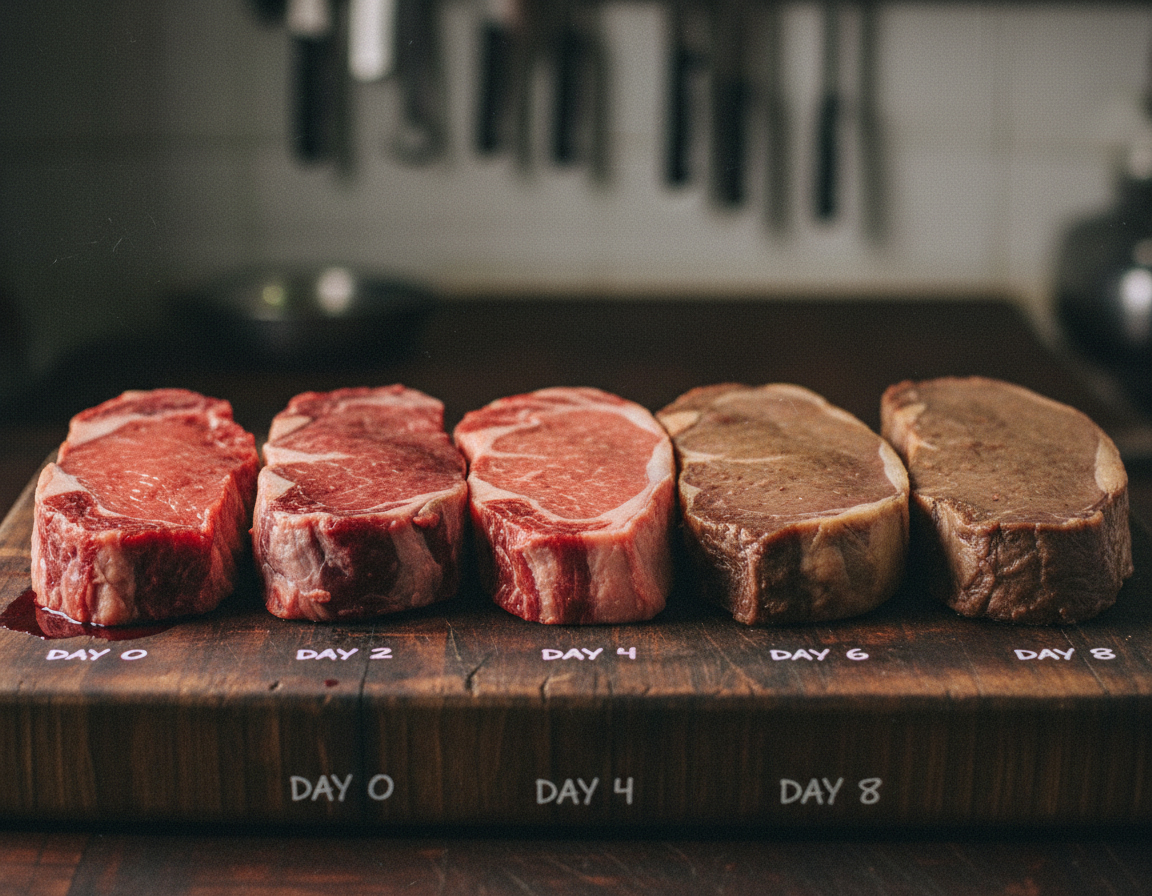
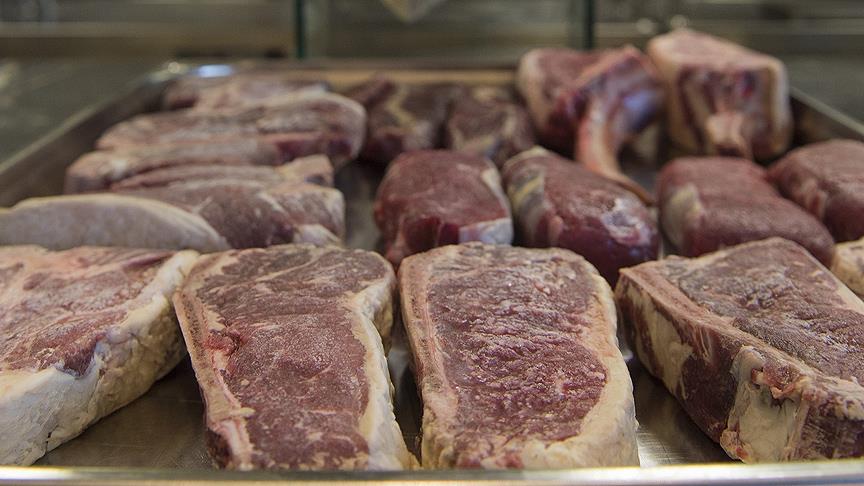
Rested meat can make people hesitate because it may smell more pronounced than the neutral profile many are used to. This smell is usually not sharp. It may feel earthy, meaty, lightly fermented. First-time encounters can create “maybe?” doubt. But this profile, especially in dry-aged meat, can be completely normal.
Good rested meat does not repel. It does not make you turn away. For some people, it can even feel appetite-opening. Key point: aroma is identifiable and clean. It is clear, not chaotic. Not aggressive or undefined.
How to Recognize Spoiled Meat Smell
Spoiled meat smell does not hide itself. If scent is sharp, sour, rotten, or ammonia-like, meat is clearly telling you “do not eat me.” This odor usually hits hard and stays. Ventilation or waiting does not remove it. It creates immediate distance between you and the product.
Spoilage odor is often accompanied by other signs: sticky/slimy texture, surface mucus, color shifting toward gray or greenish tones. But in many cases, first signal is smell. Because as bacterial activity rises, odor appears fast.
For Those Saying “I’m Not Sure”
Human smell perception works better than most people assume. In meat hesitation moments, you usually already have the answer. Uncertainty happens mostly in borderline cases. Useful distinction is this: Is this smell only making me think, or actually disturbing me?
Rested meat makes you think. Spoiled meat disturbs you. The line is subtle but clear. If your inner dialogue is “maybe cooking will fix it,” it may still be normal. If your dominant feeling is “better not eat this,” stop there.
Why Do You Notice This Less in Restaurants?
Interestingly, people are stricter at home than in restaurants. One reason is trust. Another is environment. In restaurant kitchens, meat is usually rested and handled under better controls. Also, prep stages often balance odor before cooking starts.
Related read: At What Temperature Should Meat Be Cooked??
At home, the moment package opens, all focus narrows to that smell. Silence, fewer competing aromas, and heightened attention make odor feel stronger. So panic is more common at home even when product quality is acceptable.
Does Cooking Remove Meat Smell?
Common question. Mild aroma from rested meat often transforms into deeper, appetizing smell during cooking. Spoilage odor usually does not disappear with cooking; often it becomes even clearer. This is an important distinction.
If unpleasant odor spreads while cooking, “maybe it will improve” is not a safe strategy. Meat keeps speaking through heat, and its message is usually clear.
Your Relationship with Meat Improves Through Experience
Mastering meat is not only about knowing recipes. It requires contact: smelling, touching, cooking, and yes, sometimes making mistakes. At first every smell feels suspicious. Over time, you learn what is normal and what is risky.
That turns you into a calmer cook – not someone constantly anxious, but someone who understands meat language better. That confidence reaches the plate.
Don’t Fear Smell – Treat It as a Signal
If meat smells, there is no need for instant panic. Smell alone is not the only judge, but it is a powerful guide. The fine line between rested and spoiled meat is hidden in signals your nose gives you. A clean but noticeable scent is often part of normal process. Sharp, disturbing, persistent odor means stop.
Next time you open meat, before stepping back reflexively, pause for a second. Listen to what smell is telling you. Meat usually whispers the truth.
As long as you know how to listen.
With love.