

Discover how fine dining restaurants differ from classic venues, how service specialization works, and how these restaurants relate to Michelin stars. Fine dining has become one of the key hospitality trends in recent years. It is more than simply eating to satisfy hunger; it is a high-level gastronomic experience.
Fine dining venues are places where culinary craft reaches peak expression and service quality is executed at exceptional standards. They operate with a service model far beyond conventional restaurants and deliver experiences exceeding common expectations.
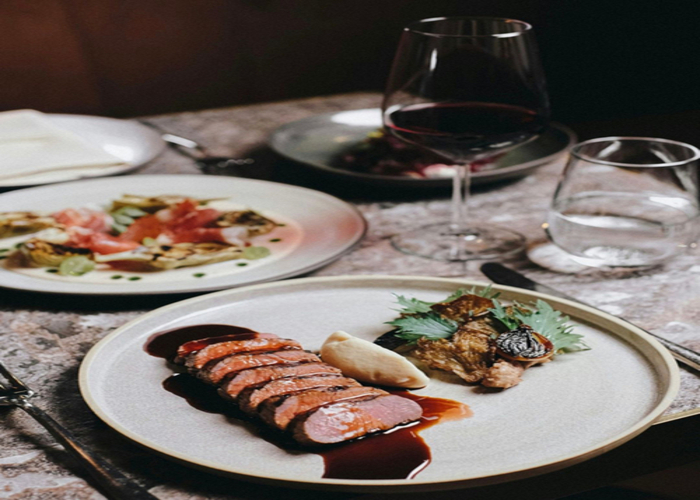
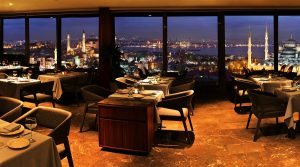
From the moment you enter a fine dining restaurant, you feel a different atmosphere. Professional welcoming, table textile quality, and crystal glassware signal premium experience. Menus are often chef-signature driven. Through tasting menus, guests follow a narrative behind each course.
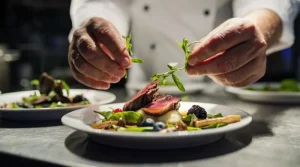
Alongside professional service, each plate is designed like a small artwork. In fine dining, you understand you are there not only to eat, but to engage in a distinct premium experience where palate satisfaction and visual elegance meet.
What Is Fine Dining?
As a term, fine dining is often translated as “good dining,” but in gastronomy it has a much deeper operational meaning. It is one of the most visible current concepts in restaurant strategy. Fine dining promises top-level flavor delivered with refined presentation standards. Four core pillars generally define it:
• Culinary execution at high technical level with premium ingredient standards. Chef signature and culinary philosophy are reflected directly on the plate. Frozen or industrial shortcuts are generally minimized.
• Service standards are designed for precision. Team members are trained with protocol-level awareness.
• Ambiance is curated to concept detail, not treated as generic decoration.
• Portion size is often criticized as small, but the model follows “less but essential” philosophy.
You may also read: Are Social-Media-Popular Restaurants Actually Good?
How Fine Dining Differs from Classic Restaurants
There are several important differences between classic restaurants and fine dining operations. While local traditional venues serve broad audiences effectively, fine dining has become increasingly prominent in recent years. Five core differences can be summarized as follows:
Service Strategy in Fine Dining
In classic restaurants, one server may handle the whole table. In fine dining, service is role-specialized. For example, a sommelier handles wine pairing recommendations.
Maitre d’hotel oversees guest flow and service choreography. Plates are often dropped and cleared in synchronized timing. Despite high team density, guests often perceive service as seamless rather than intrusive.
Ingredient Quality
In fine dining, ingredient quality expectations are uncompromising. Chefs often work with specialized suppliers and local producers. Fresh seasonal products are prioritized. Even one sauce preparation may involve long multi-stage process. Instead of large a la carte lists, many venues prefer curated 8–10 course tasting structures.
Equipment and Table Setup
Classic restaurants usually use functional standard setups. In fine dining, quality is felt immediately at the table. From linens to napkins, details are intentionally selected. Cutlery may be silver-finish, tableware may include artisanal ceramics.
Restaurant Ambiance
Ambiance design is also distinct. Instead of tight table density, spacing is generally wider, providing privacy. Acoustic planning and lighting calibration are part of experience engineering.
Pricing Model
Fine dining prices are usually higher than standard venues. But payment is not only for food quantity; it covers specialized labor, high-grade sourcing, and controlled atmosphere design.
Is a Michelin Star Mandatory for Fine Dining?
For fine dining classification itself, Michelin inspection is not mandatory. White linens, refined serviceware, trained service teams, and expert-led beverage pairing can already position a venue in fine dining segment.
For Michelin star evaluation, inspectors focus primarily on what is on the plate: product quality, technical execution, chef personality, and consistency. Decor and service style are secondary context factors. Therefore, a luxury fine dining venue may still not receive a Michelin star if plate performance is weak, while a more modest venue can receive one.
In short, fine dining is not only about eating – it is about experiencing gastronomy at a higher intensity.