

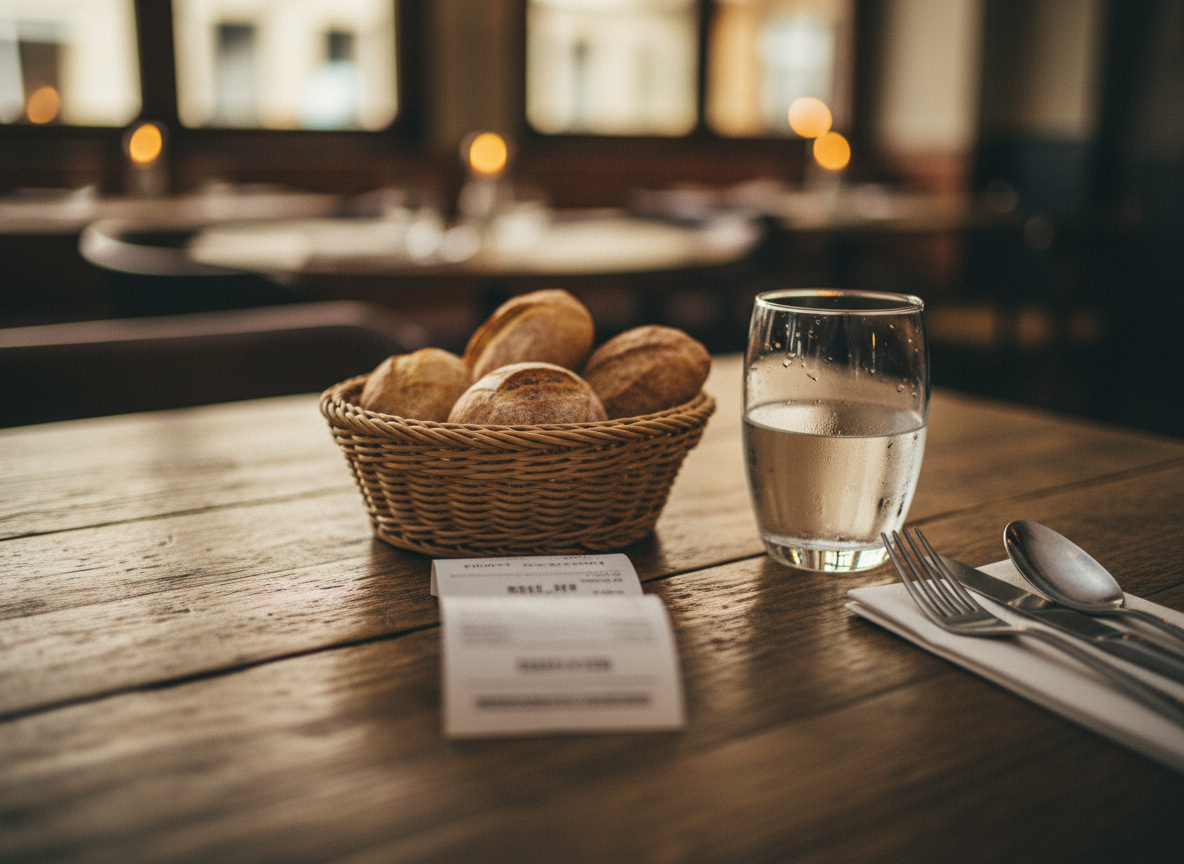
You’ve had a pleasant evening at a restaurant. Food was decent, conversation flowed, table is ready to close. You ask for the bill. Receipt comes. At the bottom, there is a familiar but confusing word: Kuver.
The first reflex is usually the same: “What is this now?” Then second question appears: “Was this added as an extra?”
If kuver is discussed this much in Turkey, the reason is simple: almost everyone faces this surprise at some point. Some see it normal, others see it as unfair. The truth is: Kuver is not always wrong, but it is not always applied transparently either. In this article, we explain what kuver is, what it covers, and in which cases objection can be reasonable.
What Does Kuver Actually Mean?
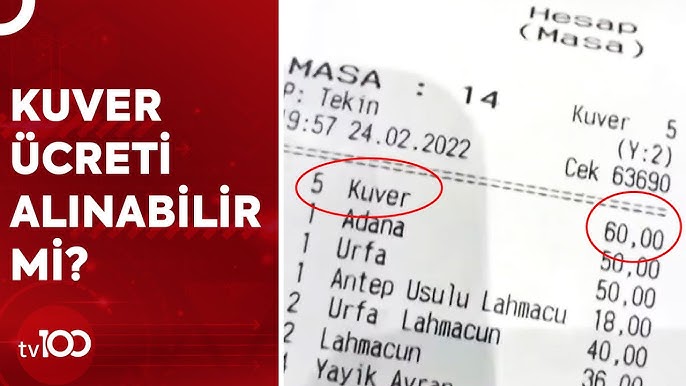
In simplest terms, kuver is like a table service charge. It is a bill line written for certain services provided once you sit at the table, independent of specific dishes ordered.
In Turkey, kuver is commonly associated with bread, water, small complimentary bites, and table setup. But one key detail matters: kuver content is not identical in every venue. That is where confusion starts.
From customer perspective, three very fair questions arise:
Did I request this?
Was it actually served?
Was I informed in advance?
If these questions have no clear answers, kuver becomes debatable.
What Does Kuver Usually Include?
In practice it varies by venue, but some items appear frequently: automatic bread basket, small starter plates, olive oil or butter beginnings. Some restaurants include water in kuver; others bill water separately.
Additionally, some places include “invisible” service components like table setup, cutlery, napkin service, and service flow under kuver logic. So kuver may be positioned not only as edible extras, but as the cost of the service structure offered to you.
Critical point: whether these items were truly provided, and whether customer was clearly informed.
When Is Kuver More Reasonable?
Acceptable scenarios are not complicated. If restaurant states kuver in advance, shows it clearly on menu, or displays visible notice at entrance/table, the practice becomes transparent. Customer can decide accordingly.
Another key factor is real value delivery. If table receives visible extras, specialty breads, or small mezes, kuver becomes more understandable. Especially in concept-driven venues where service is part of experience, this practice appears more often.
The problem begins when kuver is invisible and surprising.
When Does Kuver Become Problematic?
Objection-worthy scenarios are usually clear. If kuver is not mentioned on menu, entrance, or anywhere else, and appears only when bill arrives, that creates a valid concern.
Another frequent issue: items claimed as kuver coverage never reached the table. No bread, no extras, yet kuver billed. In that case, logic breaks because no service exists.
Some places drop automatic bites on table. You did not request them, did not consume them. Saying “I don’t want to pay for something I neither asked for nor consumed” is reasonable. There are also technical errors, such as kuver being applied for wrong number of guests.
In such cases, what matters is less the tone and more the reasoning. Concrete and calm is usually enough.
Is It Rude to Ask About Kuver at the Start?
Short answer: No.
In fact, it is often the best solution.
When you sit, asking simply “Do you charge kuver, and what does it include?” gives clarity and prevents tension at billing stage. This is not rude; it is a conscious customer reflex.
Similarly, asking whether kuver is per person and whether table extras are included is fully normal. These questions do not ruin the dining experience; they improve comfort.
How to Object Calmly When Bill Arrives
Suppose bill arrives with kuver, and you think it is incorrect. At that point, it is not only about being right, but how you communicate.
Best first step is a neutral question: “What does this kuver line include?” Then state your concrete case: “No extras came to our table” or “We didn’t consume those items.” These clear statements are often enough.
In most cases, you get correction rather than argument. Sometimes system auto-added it; sometimes it is a real human mistake. Calm communication usually resolves faster.
Are Kuver, Service Charge, and Tip the Same?
These three are frequently mixed but actually different:
Kuver: related to table setup and extras.
Service charge: separate percentage line some restaurants add.
Tip: fully voluntary thank-you.
Knowing this distinction helps you see exactly what you are paying for on receipt and avoid paying twice for the same service logic.
This may interest you: Restaurant differences
If Kuver Is Transparent, It Stops Being a Problem
Kuver on a restaurant bill is not a major problem when applied correctly. If there is real service provided and charge is communicated in advance, most customers accept it more easily. Trouble starts when kuver appears as a surprise.
A small habit can make your next visit easier. As soon as you sit, calmly ask: “Do you have kuver, and what does it include?”
This one sentence protects both the bill and the mood of your evening. Then you can focus on your meal, your conversation, your enjoyment – not the bottom line of the receipt.