

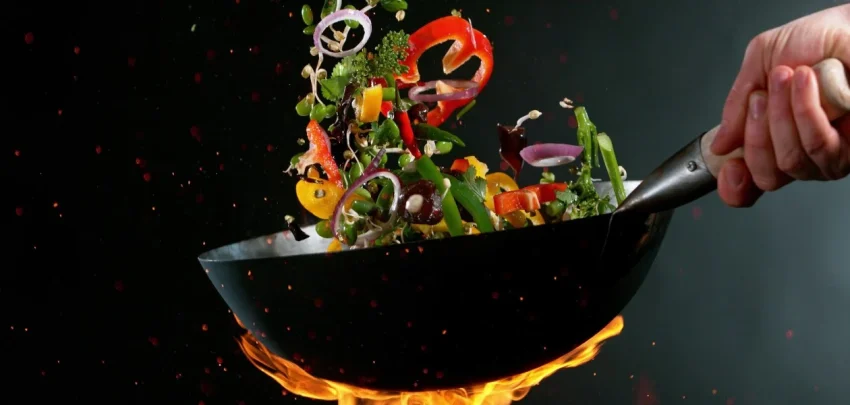
Far East cuisine has remained popular worldwide for many years. One major reason behind this popularity is equipment quality. Among these tools, the wok pan is at the top. So, what is a wok pan for? It is not just a cooking vessel. It creates a unique interaction between flame, vegetables, and meat during cooking.
What Is a Wok Pan For? Core Features
If you want to improve your cooking culture and move toward Far East techniques, you should understand what a wok pan is for and how to use it. Learning to use this pan well helps you master dishes that taste professional. Here are the key wok pan features:
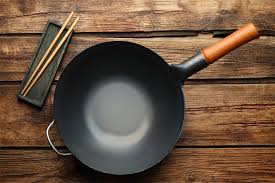
- Wok pans are usually made of carbon steel or cast iron. They transfer heat quickly, allowing fast searing.
- They are structurally different from classic pans: deeper and concave.
- The bottom center is a high-heat zone, while side walls stay relatively cooler.
- Chefs move ingredients across different heat zones to control cooking timing.
- They create the “Wok Hei” effect (Breath of Fire), which gives smoky aroma.
- They are multifunctional and can be used beyond sauteing.
- They allow high-heat quick cooking, helping ingredients preserve nutritional value.
Wok Heat Management and the Wok Hei Effect
If you ask what a wok pan is for, you should also know how to use it correctly. To prepare Far East dishes at a high level, you need the Wok Hei effect. This “Breath of Fire” technique is widely used by professional chefs. To create it at home, the first step is proper heat setup.
Wok Hei does not come from high heat alone. Ingredients must also be kept in constant motion inside the pan. This allows oil particles to interact with oxygen quickly, creating caramelized aroma.
You should also read this: Meat Cooking Levels: Which Meat Works Best in Which Dish?
Which Oils Should You Use in a Wok?
If you want professional results with a wok, oil selection is critical. Smoke point is one of the most important factors for flavor quality. Since woks are used at high heat, low smoke-point oils should be avoided. In this context, oils used in wok cooking must be heat-resistant. Canola oil and corn oil are practical options.
What Is the Correct Ingredient Order in a Wok?
In great Far East dishes, both ingredient quality and sequence matter. You need to be especially careful with wok ingredient order. Cooking in a wok is often described as speed art, and proper order is the foundation of that art. To use heat hierarchy correctly and avoid undercooked ingredients, add components in sequence. First, the wok base must be fully heated.
After heating, add oil and aromatics. Next, add meat, chicken, or seafood directly. At this stage proteins are quickly seared. Then move them to the side and add vegetables. Hard vegetables like carrot and broccoli should go to center first; soft leafy vegetables come later. Once everything is combined, add sauce and bring proteins back to center.
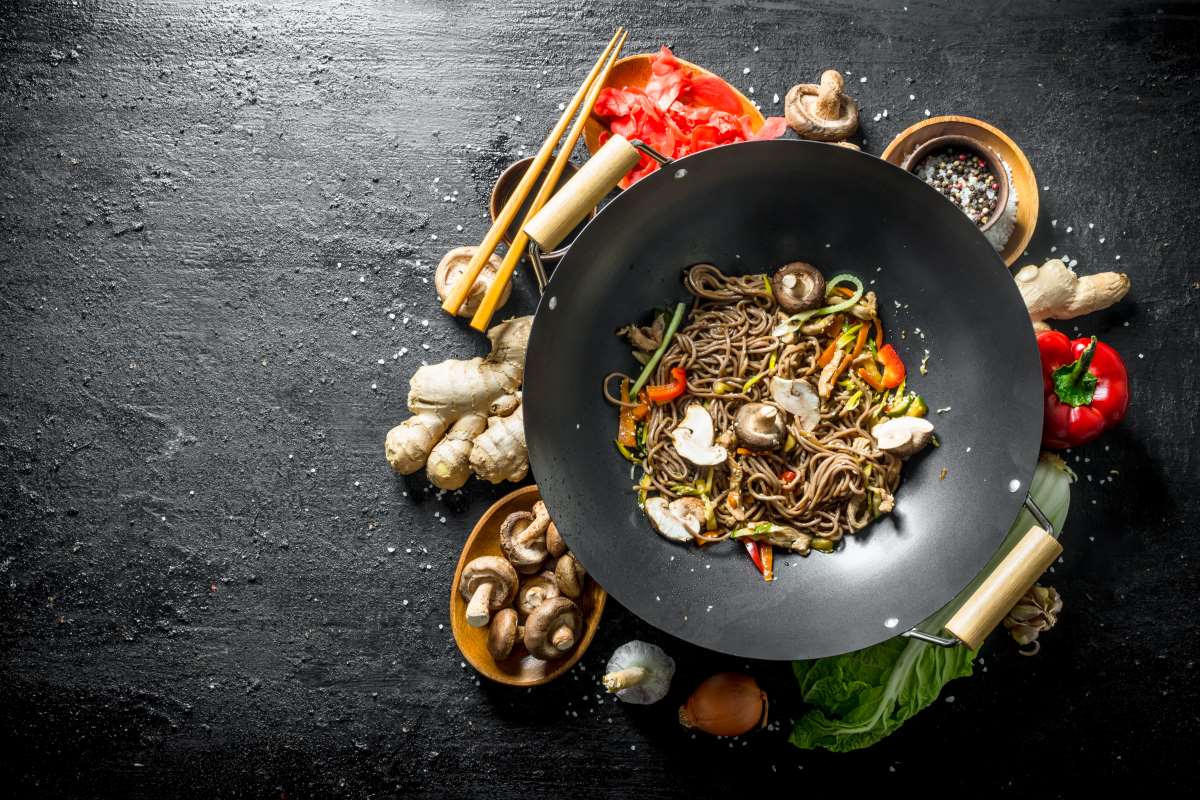
Stirring and Tossing Techniques in a Wok
To cook ingredients properly, wok handling technique matters. Unlike classic pans, wok use is more dynamic. The common method is stir-frying: continuous turning and movement of ingredients. This helps all ingredients exposed to high heat cook evenly. Alongside what a wok pan is for, how it is used is equally important.
With proper tossing, outer surfaces caramelize better. Professional chefs use the curved geometry of the wok while tossing, pushing forward and back with wrist movement. In some cases, briefly lifting ingredients in motion improves results further.
How to Clean and Maintain a Wok
Even high-quality wok pans have a lifespan. If you want long-term performance, maintenance is essential. So what is a wok pan for, and how should it be cleaned? Never place a hot wok directly into a dishwasher, and avoid harsh detergents.
After cooking, wash it by hand with warm water and a soft brush. Then dry it on heat. After drying, apply a thin oil layer and heat until light smoke appears; this refreshes the seasoning layer.
Flat-Bottom or Round-Bottom Wok?
Most woks sold in Turkey are flat-bottomed because they fit home stoves more easily. In traditional Far East kitchens, however, round-bottom woks are preferred.
| Feature | Flat-Bottom Wok | Round-Bottom Wok |
|---|---|---|
| Compatibility with home stove | High | Low (adapter needed) |
| Heat distribution | Balanced | Center-focused |
| Professional usage | Medium | High |
| Wok Hei effect | Limited | Stronger |
If you cook at home, flat-bottom woks are usually more practical. If you have a powerful gas stove, round-bottom woks produce more authentic results.
Which Dishes Work Best in a Wok?
Wok pans give great results in fast-cooking dishes such as:
-
Vegetable noodles
-
Chicken vegetable stir-fry
-
Beef stir-fry
-
Shrimp noodles
-
Chinese-style fried rice
For dishes requiring long simmering, a classic pot is usually better.
How to Prepare a Wok for First Use (Seasoning)
If you bought a carbon-steel wok, apply seasoning before first use:
-
Wash the pan with soapy water (first and only soap use).
-
Dry it completely.
-
Apply a thin oil layer.
-
Heat at medium-high until oil starts smoking.
-
Repeat this process 2-3 times.
This creates a natural non-stick surface.
Then,
So, Is a Wok Pan a Must-Have?
Honestly, a wok is not mandatory in every kitchen. If you cook noodles only occasionally and are satisfied with standard saute in a classic pan, life continues fine without one.
But if you enjoy culinary experiments, things change.
My observation: many people buy a wok out of curiosity. Once they learn to use it correctly, they usually do not want to return to a standard pan. The difference is clear: vegetables stay crisp, meat gets seared outside while staying juicy inside.
A wok gives strong advantage especially when:
-
You frequently cook Asian cuisine
-
You like crispy vegetables
-
You want fast one-pan meals
-
You need to prepare large portions quickly
If you mostly cook omelets, menemen, and occasional saute, a classic pan may be enough.
There is also one reality: wok cooking requires some technique. If heat is not managed well or the pan is overcrowded, performance drops. So yes, a wok is equipment that makes a real difference when used correctly.