

Kebab is a fascinating topic. Because everyone has an opinion. “I know a place, it’s legendary.” “No way, real kebab is eaten over there.” And there is a downside too. From the outside, most kebab places look similar. Bright sign, grill, long menu. But the places we call “real” kebab restaurants reveal themselves as soon as you walk in. They do certain things differently.
In this article, we will talk about practical signs that really work, without pretending to be a gourmet expert. We will also answer the question, “Why does this matter?” Because kebab is not only meat. It is about craftsmanship, cleanliness, balance, and honesty.
What does a “real kebab restaurant” mean? Let’s set expectations first
Before we move on, let’s clarify the definition. A real kebab restaurant does not necessarily mean the most expensive, most popular, or trendiest place. In fact, it is often the opposite. It means a place that focuses on its craft, manages meat and fire properly, and delivers consistent flavor.
So the goal is this: getting a similar quality every time you visit. Properly cooked meat, balanced seasoning, and smooth service flow. If these exist, you feel that sense of authenticity.
Why is this actually important?
Because kebab is a dish that does not forgive small mistakes. Meat quality, marination, heat management, resting. If one link in that chain breaks, the result is immediately obvious. Then you get that feeling: “We ate kebab, but we do not need to come back.”
First sign: Fire and grill management
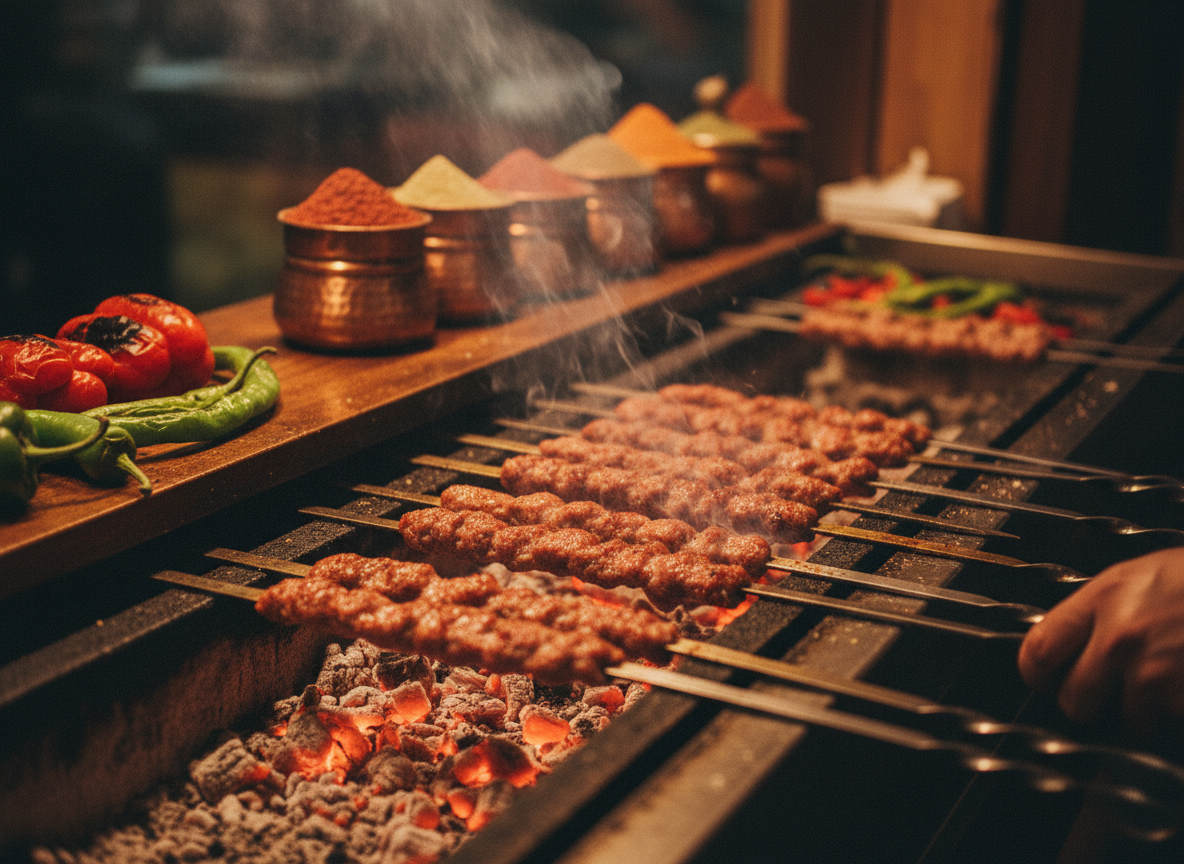
Now we are getting to the core of it. The fastest way to tell whether a kebab place is authentic is how it manages fire. This section naturally prepares the next sign too. Because when the fire is right, the meat starts speaking for itself.
Charcoal increases your chances, but it is not enough on its own
Charcoal fire often gives better aroma. But some places use charcoal only for “show.” What matters is fire control.
In a real kebab restaurant, you notice these:
- The color and heat of the charcoal are stable.
- Someone at the grill is actually paying attention.
- The meat is not burned by flames; it is cooked by controlled heat.
What does this improve?
When heat management is good, the meat stays juicy and gets a proper sear on the outside. You do not get a burnt taste. The charcoal smell does not overpower the meat. In short, the true “meat” flavor is preserved.
Second sign: The language of meat – color, smell, texture
Now let’s look at the meat itself. Keep this in mind as we move forward: meat gives itself away. A skilled master can hide many things, but bad meat cannot be hidden. You can understand it from color, smell, and of course taste.
Raw meat smell should not be harsh
If you get a sharp, disturbing smell when you approach the counter, that is a bad signal. Good meat smells clean and natural. An overly spiced smell is sometimes used to cover flaws.
The color of cooked meat should not be “gray”
If kebab arrives in a grayish tone, there are usually two possibilities. Either it waited too long at low heat, or the meat quality is weak. In good kebab, the color is lively. The outside is lightly browned, and the inside stays juicy.
Why does this matter?
Because good meat combined with proper cooking does not tire your stomach. Then the “it felt heavy” complaints decrease. This is exactly what people look for after kebab: flavor without heaviness.
Third sign: If the menu is shorter, it is often better
Now let’s move to a slightly surprising point. Real kebab places sometimes have shorter menus than you expect. Because no one can cook everything at the same quality level. Here is a great kebab master.
Fewer items can mean more craftsmanship
If there are 70 items on the menu, there are 70 different kitchen workflows. That spreads quality thin. A good kebab restaurant usually focuses on this:
Main items like Adana, Urfa, skewer kebab, liver.
A few clear wrap options.
Core mezes.
What does this improve?
Focus raises consistency. Since the master repeats the same craft over and over, the margin of error goes down. Guests also get that feeling: “This is a place where kebab is done right.”
Fourth sign: Onion, lavash, ayran – the supporting actors
Kebab is not just a piece of meat. Everything served beside it is actually a quality test. Keep this in mind as we continue: places that care about side items usually care about the main item too.
Balance of onion and sumac
Is the onion fresh and crisp? Is the sumac stale or vibrant? It sounds simple, but it tells a lot. Stale onion is a bad surprise. A good kebab place does not take that risk.
Is the lavash warm or rubbery?
If lavash is fresh, it comes slightly warm. If it is old, it gets hard or chewy like rubber. Some places try to save it by reheating, but you can still tell.
Ayran is not about the brand; it is about temperature and harmony
A branded ayran may be nice, but the real issue is serving it cold and pairing it properly with the meal. Lukewarm ayran signals carelessness.
Fifth sign: Cleanliness and order, especially in places you do not see first
Now for an unpleasant but very important topic: cleanliness. A kebab place’s authenticity is not measured only by flavor. Hygiene directly affects trust.
Look for signals at the table and in the restroom
Table cleanliness, napkin order, serving tools. These create the first impression. But the real test is often the restroom. If the restroom is clean, the chance that the back-of-house is also organized is much higher.
Why does this matter?
Because kebab is a meat product. In meat service, hygiene is not “nice to have.” It is mandatory. Good kebab restaurants know this and stay meticulous.
Sixth sign: Regulars and rhythm – is the place full, is there turnover?
So far we talked technical details. Now let’s step into real-life observation. One of the strongest signs is the type of crowd.
Lunch and dinner rhythm
At a good kebab place, there is a flow at certain hours. Takeaway orders leaving, tables filling and emptying, movement at the counter. If a place is empty and static, that alone is not always bad. But meat turnover may be slow.
Regular customer behavior
If regulars say this line, you are probably in the right place:
“Master, the usual.”
That sentence shows consistency is established.
Seventh sign: The master’s confidence – clarity, not exaggeration
A real kebab place does not boast; it lets the work speak. Think of it this way: exaggeration often hides emptiness. Clarity builds trust.
When you ask, the answer is clear
“Where does the meat come from?”
“How many grams is the Adana portion?”
“How spicy is it?”
In a good place, answers are not long. They are clear, short, and consistent. Everyone says “special,” but places that provide concrete detail are more trustworthy.
You can also save money while eating kebab: a small note
Let this be a bonus section. Because kebab can sometimes strain the budget.
Wraps can be more economical than full plates.
Keeping drinks simple lowers the bill.
Not overloading on meze is usually enough.
These small choices help you save without ruining the experience.
See also: How to Find a Good Tradesman Restaurant ?
A real kebab place means discipline before show
You do not need to be a gourmet to understand whether a kebab place is truly authentic. Fire management, the language of meat, menu focus, side-item quality, cleanliness, regular-customer rhythm, and the master’s clarity. If these signals come together, you are very likely in the right place.
On your next kebab visit, try this mini test. Look at the lavash, look at the onion, smell the meat, observe the movement at the grill. Then ask yourself: “Can this place deliver the same quality every day?” If your answer is yes, then you have found a truly authentic kebab restaurant.
What is your own benchmark for a “good kebab place”? Which detail gives you the most confidence? On your next visit, track that specific detail on purpose. Because taste memory is the best guide.