

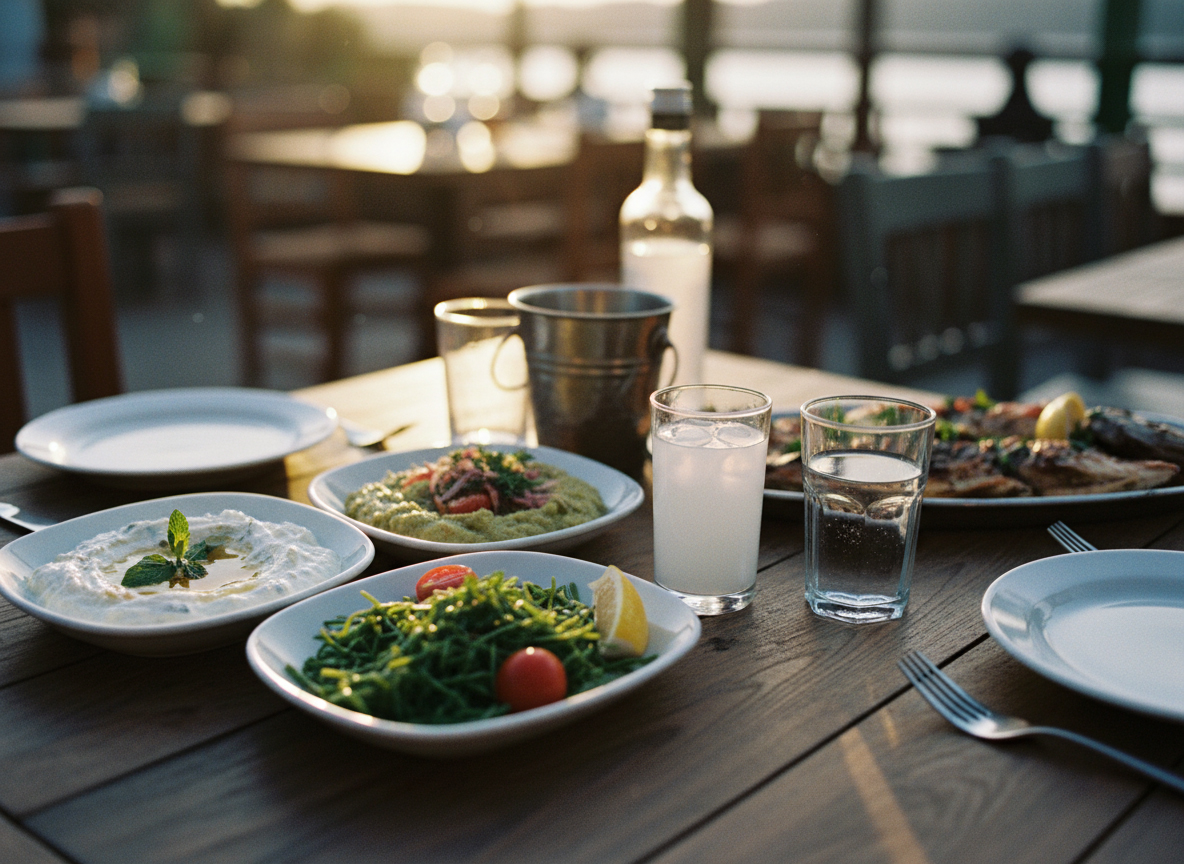
A raki-fish table is not built instantly. It has a rhythm, a pace, a sequence. Those small plates that arrive when you first sit down actually whisper how the evening will flow. That is why the question “which meze should be eaten first” is not a trivial detail. Correct order opens the flavor of raki and keeps fish in the spotlight.
In this article, I explain the logic of meze sequencing at a raki-fish table. Not with memorized lists, but with a practical flow that truly works. A format you can use both at home and in a meyhane.
Why Is Meze Order So Important?
Meze is not just idle waiting before the main dish. With raki, your palate opens step by step. If you start with heavy, dominant mezes too early, many flavors that come later get erased. Everything blends into one blur.
A good meze order does not tire the palate. It prevents flavors from overlapping too hard. Most importantly, it keeps the table unhurried. At a raki-fish table, speed is not the point; balance is. If you still have appetite when fish arrives, the order is right.
Core Logic of the Raki-Fish Table
There is one main rule: move from light to intense. In both taste and weight. Sour, salty, oily, garlicky notes should rise gradually.
Once you understand this, you stop overthinking “this first or that later.” You look at the plates and naturally build the sequence. A raki-fish table is also an intuition craft.
How Should the First Mezes Be?
Beginning of the table is not for fullness. It is for opening the palate. First mezes should be fresh and awakening, not tiring. Light yogurt-based mezes, olive-oil dishes, and seasonal salads belong here.
At this stage, fish-friendly accents like arugula, onion, and lemon are also on table. Goal is to create the feeling: “the evening has started.” Bread control matters too. If you overload bread early, sequence collapses and everything tastes the same.
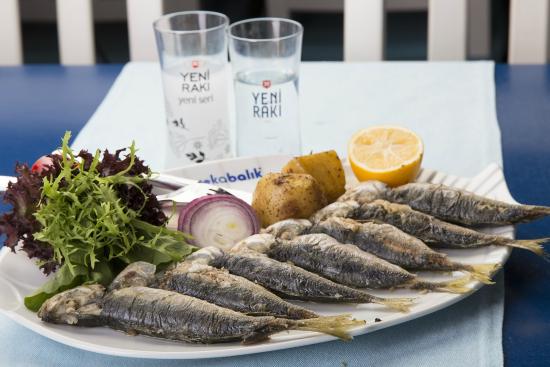
The Table Deepens in Mid-Stage Mezes
After the opening, intensity increases one level. But creamy and very heavy mezes are still not center stage. Seafood mezes and vegetable-led plates form the backbone here.
Sea beans, fava, calamari, or shrimp salad fit this point perfectly. They work with raki and carry the “sea” feeling into the table. These dishes are neither too light nor overpowering. That is why this is the critical link of meze sequencing.
A common mistake is leaving seafood mezes to the end. After heavy mezes, those flavors fade. Seafood mezes shine when served in the middle section.
When Should Intense Mezes Enter?
Haydari, atom, tarama, cheese-heavy and garlicky mezes are strong players. Their flavor impact is high and clear. So they should come not at the beginning, but around mid-table.
These mezes pair very well with raki, but they can also overshadow fish. So everything should not arrive at once. Usually two strong mezes are enough. More causes flavor chaos.
Balance is key here. Intense mezes enrich the evening, but if uncontrolled, they take over the table.
Timing of Hot Mezes
Hot plates bring energy to a raki-fish table, but overdoing them kills appetite. Fried calamari, shrimp casserole, fish balls – these should arrive neither too early nor too late.
Best timing is after mid mezes, or together with intense mezes. This brings movement while keeping fish as lead role. Keep hot plate count low. One or two is usually enough.
When Should Fish Arrive?
Fish is not a final after mezes end. It should arrive after a certain part of the meze flow and take the center of the table. Because meze is not preparation for fish; it is fish’s companion.
When fish arrives, refreshing elements should still be present: arugula, onion, lemon. Avoid overloading yogurt-based and heavy mezes at the same moment. Fish flavor is delicate; it needs calm companions.
Most Common Meze-Order Mistakes
Biggest mistake is ordering everything at once. That breaks sequence and turns table into chaos. Second mistake is filling up on heavy mezes and leaving no room for fish. Third is treating hot mezes like main courses.
A raki-fish table becomes beautiful in small steps. Starting with two plates and continuing according to table rhythm is usually the best approach.
At a raki-fish table, what matters is not only what you eat, but when you eat it. If meze order is right, raki flows more balanced, fish does not disappear, and conversation is not interrupted. Try a small experiment next time: don’t order everything immediately. Let the flow lead. You’ll feel the difference by the first glass.
My personal recommendation: Istiridye Balik Tuzla