

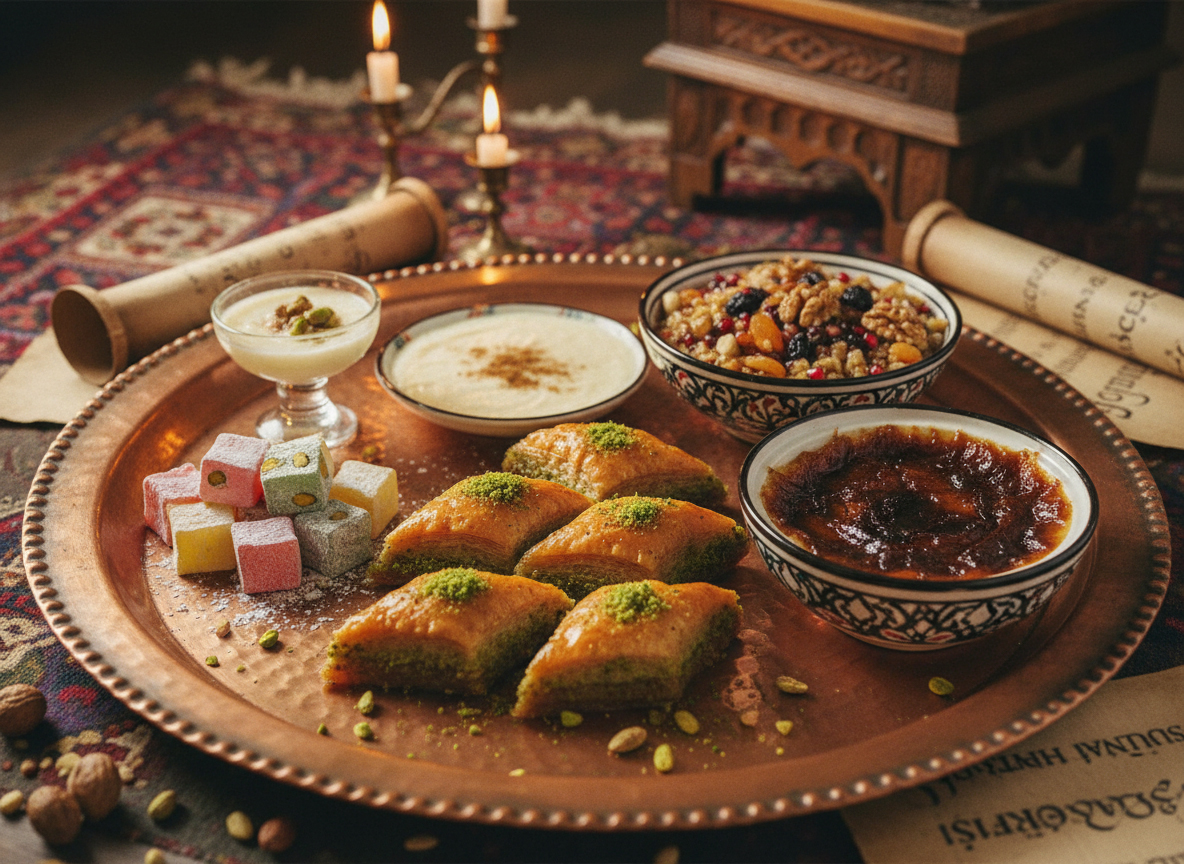
Sometimes you eat a dessert and it doesn’t end with “it was sweet.” A whole period comes to mind: old kitchens, copper pots, syrups stirred slowly. Ottoman cuisine leaves exactly that feeling. In this tradition, dessert is not only about sugar. It is hospitality, prestige, craftsmanship, and patience.
In the Ottoman world, eating dessert was not today’s “I felt like it.” Dessert appeared at holidays, for guests, and when hearts needed softening. While palace kitchens were measured, recorded, and disciplined, public kitchens were more practical and accessible, yet still flavor-focused. Many desserts we still eat were born from the meeting point of these two worlds.
Baklava: A Performance Built on Patience
It is no coincidence that baklava immediately evokes the Ottoman palace. Baklava does not tolerate haste. It needs ultra-thin dough, layered precision, and balanced syrup. In Ottoman times, baklava in palace kitchens was a display of power and craftsmanship. The foundation of modern baklava culture was laid there.
Recognizing good baklava is actually simple. If layers are thick and syrup pools on plate, shortcuts were taken. Real baklava speaks not with syrup overload, but with balance. It does not tire you, but stays in memory.
Kazandibi: Even Burnt Notes Can Be Elegant
Kazandibi doesn’t look dramatic at first. Its secret is exactly that. It begins like a milk dessert and gains identity with that light caramelized-burnt layer. Milk desserts were important in Ottoman cuisine, and kazandibi became one of the most skill-sensitive examples.
Burn it too much and it turns bitter; too little and it loses soul. That is why good kazandibi reveals a dessert shop’s level. Smooth mouthfeel, clear but controlled burnt note… it looks simple, but true masters are few.
Tavukgogsu: Tests You by Name, Convinces You by Taste
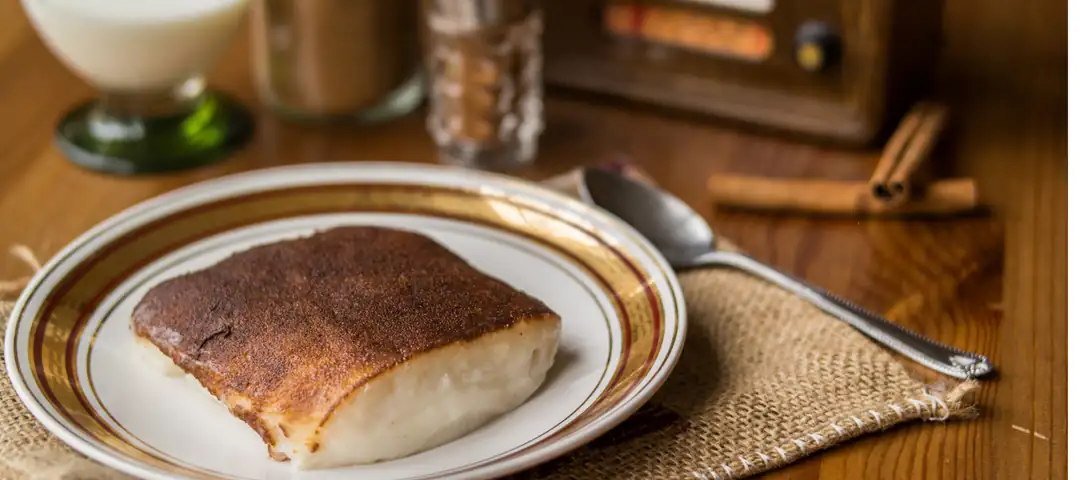
Tavukgogsu is one of Ottoman cuisine’s most surprising desserts. First time hearing the name, people pause: chicken in dessert? Yes. And when done right, you don’t taste chicken at all. The point is texture, not meat flavor.
Shredded chicken gives that silky structure. It is a strong example of palace-kitchen courage in ingredient design. For people tired of heavy syrup desserts but loyal to milk desserts, it remains an excellent option.
Asure: More Than Dessert, A Social Tradition
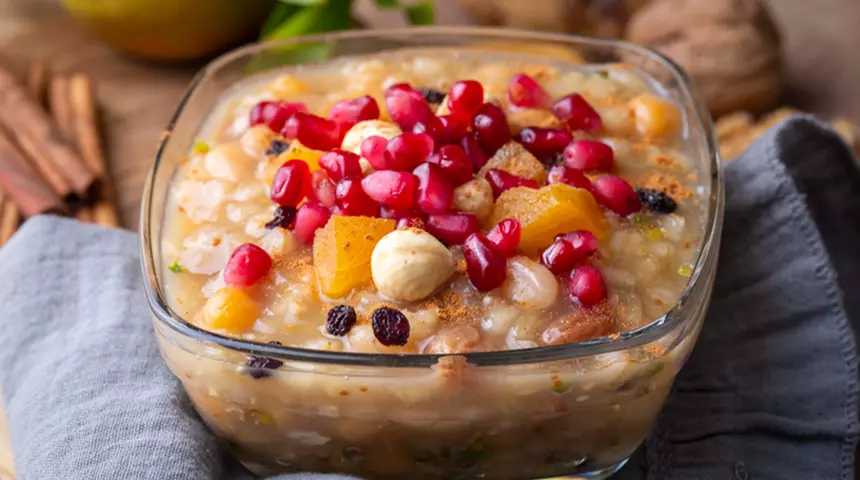
In Ottoman cuisine, asure was not only eaten, it was shared. Many ingredients come together in one pot. This blend is not random; asure symbolizes coexistence.
In Ottoman times, it was cooked at home, distributed to neighbors, and offered in streets. If this practice still survives, it is because asure belongs not only to palate but also to collective memory. Good asure is neither over-sweet nor chaotic. Every ingredient is present, none shouts.
Lokum: Small Piece, Big Impact
Lokum is one of the most elegant desserts Ottoman culture carried to the world. Small, portable, giftable – that is part of its distinction. In Ottoman etiquette, lokum was a quiet expression of value toward guests.
Over time, rose, pistachio, walnut varieties expanded, but core remained unchanged: soft texture, balanced sweetness, natural aroma. Good lokum reveals itself by smell: not artificial, not aggressive, and with a clean melt in mouth.
Sometimes You Should Pause While Eating Dessert
These Ottoman-rooted desserts are not just flavors. Each carries a habit, a culture, and a story. Baklava speaks patience, kazandibi speaks balance, tavukgogsu speaks craftsmanship, asure speaks sharing, lokum speaks refined hospitality.
Next time you choose dessert, don’t only ask “what do I crave.” What is your favorite? Mine is pistachio baklava, especially when it’s extra crispy.
Then ask this: “Which story do I want to taste today?”
The answer is very likely waiting somewhere in this cuisine.