

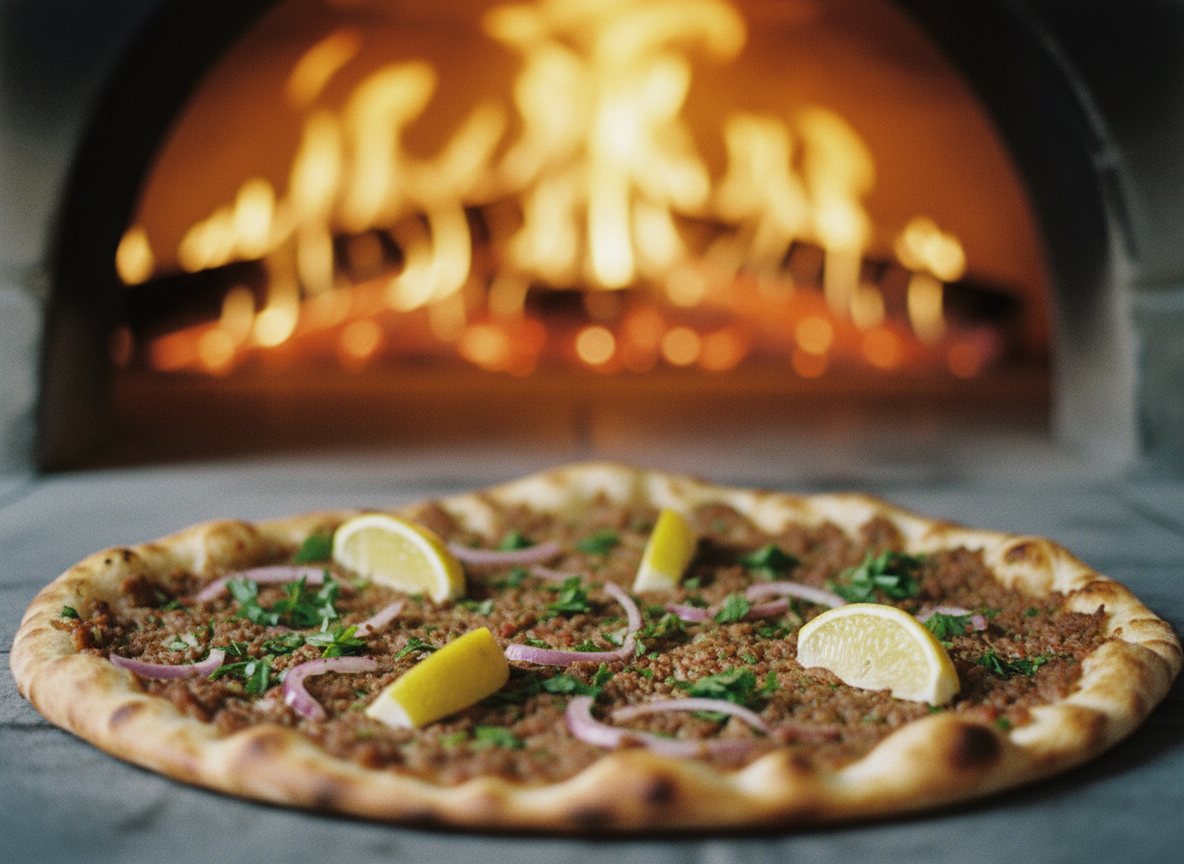
Lahmacun looks like one of the most practical foods at first glance. Thin dough is rolled out, minced topping is spread, it goes into the oven, and comes out in a few minutes. Once it reaches the table, people usually eat it fast without overthinking. But here is the strange part: everyone eats lahmacun, yet not everyone is eating the same quality lahmacun.
In one place, you order two and feel like getting a third. In another, you stop halfway through one and say “that’s enough.” The reason cannot be explained with a single line like “the meat was bad.” Lahmacun is all about small details creating a big difference when combined. Dough, edges, topping, oven, and service speed. If they align on the same line, you get truly good lahmacun.
In this article, I want to clarify how to recognize a good lahmacun. It will help both when you eat outside and when you want to understand why your favorite place is actually your favorite. One more thing: while looking for good lahmacun, you do not need heavy technical language. Your eyes and palate already catch most signals. You only need to know where to look.
Dough Must Be Thin, But Not Fragile
Lahmacun’s identity starts with dough. No matter how good the topping is, if dough is wrong, it turns into something like “bread with meat.” Good lahmacun dough is thin, yes. But thin does not mean paper-fragile. When you lift it, the center can sag slightly but should not tear. When folded, it should not crack or crumble from the edge like dust. It should not feel sticky and undercooked while biting.
There is actually a simple test: If lahmacun folds easily in your hand without breaking, that is good. If it cracks in half while folding, dough may be too dry or overcooked in the oven. If it stretches like rubber and sticks to your bite, dough may be undercooked or unbalanced.
Good dough brings the topping forward. It does not try to dominate. It does not shout “I am here.” It carries the flavor but still has character. When that thin balance is right, lahmacun feels light. After finishing one, you do not say “I’m full,” you say “I could eat one more.”
The Crispy Edge Question: Not Burnt, Never Dry
When people hear “crispy edge,” many imagine dark burnt edges. But good crispness is not burning. Burnt means bitter. A good crispy edge gives a pleasant crunch and does not leave hard discomfort in the mouth.
In good lahmacun, edge is thin, lightly puffed, and gives sound when you bite. But it does not feel like stone. Very hard edges usually show the lahmacun was overdried. If edges are completely soft, either oven heat was not right or lahmacun waited too long after baking. As lahmacun waits, edges soften quickly. That is why the same place can feel amazing one day and just “okay” another day. Oven exit and service speed are critical.
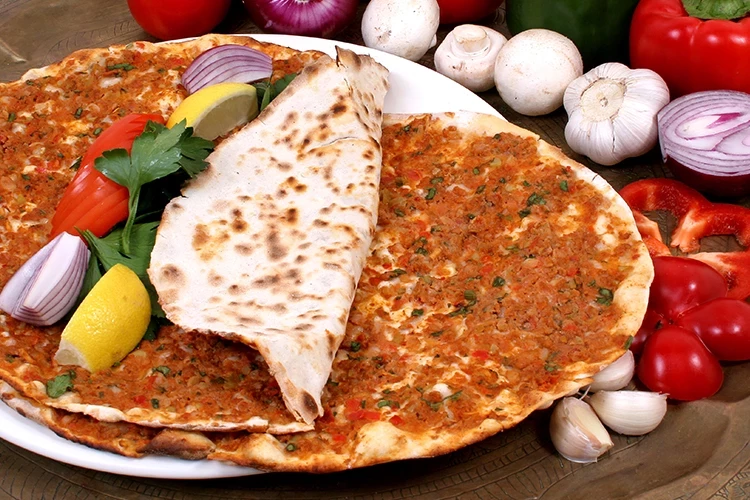
There is also edge-center balance. Edge can be crispy, but center must stay tender and juicy. Crispy edge + raw center breaks balance. Burnt edge + dry center also kills enjoyment. In good lahmacun, edge and center both feel “properly cooked.” Not too hard, not too soft. Right in between.
Topping Does Not Have to Be Heavy, It Has to Be Balanced
One of the biggest misconceptions is “more topping means better lahmacun.” Heavy topping can look generous, but lahmacun is a fast-cooked product; excessive thickness often ruins balance. If topping is too thick, the top cooks while moisture soaks into the dough. Result: wet base, gummy folds, heavy bites. If topping is too light, dough dominates and taste becomes flat.
In good lahmacun, topping is spread as a thin even layer. Every bite tastes consistent. You do not get one bite of plain dough and the next bite of only meat. Topping reaches close to edges but does not drown them. This consistency is one of the clearest signs of skilled craftsmanship. In careless places, topping piles in one area and stays empty in another. Then lahmacun becomes inconsistent: first bite good, second dry, third overly spicy.
Meat quality is of course important. But meat alone does not tell the story. Lahmacun topping is also about harmony. Meat, vegetables, spices, tomato paste. All should work as one integrated flavor. No single component should jump out and suppress everything else.
Onion, Tomato, Pepper, and Spice: Fine Tuning That Carries Flavor
Vegetable ratio in topping is one of the key things that make lahmacun lahmacun. Onion, for example: too much leaves a sharp lingering smell. Too little flattens depth. In good lahmacun, onion is not obvious as a separate piece, yet its absence would be felt. It melts into the mix and gives body.
Tomato is similar. Correct amount adds freshness. Too much makes topping watery. Watery topping wets dough. Then center is not “soft,” it is “wet.” A wet center kills the effect of crispy edges because the bite feels structurally messy.
You can also read: What to Drink with Which Dish?
Pepper and spice matter too. Many people love heat, but heat should not control everything. In good lahmacun, heat arrives from the back. It does not slap you on first bite. It leaves a warm finish that invites the next bite. If spice is excessive, after a point you only taste heat and lose the rest.
Then there is spice freshness. You can sometimes detect stale spice before the plate even settles. In good places, topping smells fresh. Not just cooked meat smell, but balanced “lahmacun aroma.” This subtle difference often reveals quality quickly.
Oven and Service: Lahmacun Does Not Like Waiting
Lahmacun’s biggest advantage is fast cooking. But that is also the biggest risk. In a few minutes, it can shift from “perfect” to “just okay.” If oven heat is wrong, either edges burn or center stays undercooked. In skilled ovens, lahmacun cooks fast, edges crisp up, topping does not dry out.
Service matters as much as the oven. Lahmacun must arrive hot. Waiting lahmacun loses character quickly: edges soften, topping dries, dough gets heavy. Good places serve it immediately after baking. Delivery can be risky for this reason; even great lahmacun can steam-soften on the road. Still, proper packaging reduces this effect.
Side greens, lemon, and sumac onion are not decorative. They are part of balance. Fresh parsley, crisp lettuce, and well-made sumac onion refresh lahmacun and reduce oil heaviness. Fresh lemon is obvious from the first squeeze. Wilted greens or stale lemon usually signal that details are not prioritized. Since lahmacun is a detail-driven food, that signal is often accurate.
You really do not need to overcomplicate lahmacun choice. How does dough fold? How do edges react when bitten? Is topping spread evenly? Is center wet? Was it served hot? Once you start noticing these, good lahmacun becomes obvious both to your eyes and palate. Then you begin returning not only for taste, but for that “perfectly aligned balance.” You eat one, and your hand reaches for the second automatically. That feeling usually means you are on the right track.
Personally, this is my regular choice: Hacıoğlu Lahmacun