

Checking Google reviews before going somewhere has become a reflex. We see “4.6 stars, great” and go. Or the opposite: we see one harsh review and cancel the plan. But the truth is this: Google reviews can be very useful, and sometimes very misleading. Because inside those reviews, there are both honest opinions and also entries that are artificially polished or unfairly destructive.
In this article, we’ll clarify how much you can trust Google reviews. We’ll cover practical signals to filter fake reviews. Then I’ll give you a simple but strong method for selecting the right restaurant. So instead of getting confused by comments, you’ll decide faster and better.
How Google reviews work: score alone is not enough
To understand the foundation, we need to talk about ratings first. Keep this in mind: seeing 4.7 stars looks good, but by itself it doesn’t say enough.
A restaurant’s Google score is generally shown as an average. But that does not mean every review has the same diagnostic value. Review timing, reviewer behavior style, and period-specific service quality all affect interpretation.
Why does this matter?
Because some places deliver excellent service at launch, ratings get inflated, then staff changes and quality drops while the score still appears high. The reverse can happen too: score stays low because of an older bad period, while the place has already improved. So rating is often a delayed indicator.
Who is this for?
Anyone choosing a new place to eat. Especially important for people choosing in tourist-heavy zones, where review manipulation can be more common.
What is a fake review? Not every bad review is fake
Let’s define fake reviews clearly. Keep this in mind: fake does not only mean “overly positive.” Overly negative can also be fake.
Fake reviews are usually written for two goals:
Make a place look better than it is.
Make a competitor look worse.
Sometimes there’s one more motive: revenge after an argument. So when filtering fake reviews, follow signals, not emotions.
7 practical signals to filter fake reviews
Now we are in the most useful section. The goal is not to stop reading reviews, but to read them through a better filter.
- Be cautious when language is too generic
Comments like “Amazing place, perfect service, must go” are weak signals by themselves because they lack specifics. Real reviews usually include concrete details.
Example details:
“Adana was a bit salty but lahmacun was excellent.”
“Soup came hot, service was fast.”
“Even in rush hour, food arrived in 10 minutes.”
If there are details, the chance of real experience increases.
- Too many similar reviews on the same day
If a restaurant receives 15 back-to-back reviews with similar tone in one day, that may be unnatural. It can happen during opening or campaign periods, yes. But if wording is too similar, suspicion rises.
What does this help with? It helps detect bulk-review manipulation.
- Check reviewer profile traces
Ask these when you inspect the profile:
Did they review only one business?
Do they always write in the same city pattern?
Are all comments short and extreme?
No photos, no detail, always 5 stars: this is a signal. Not proof alone, but signal.
- Photos usually reveal reality faster
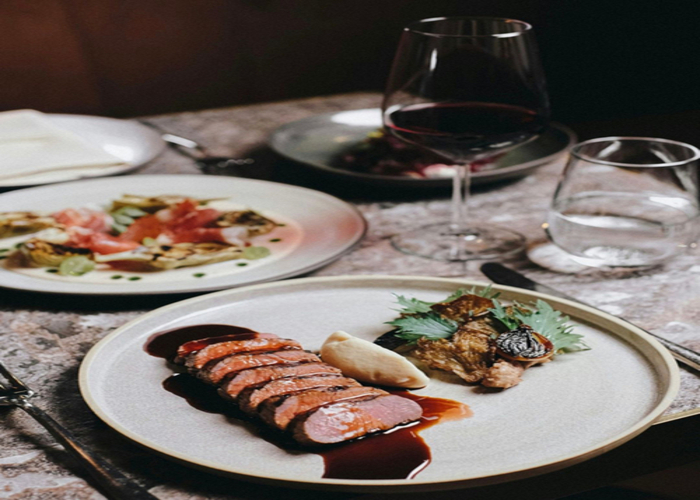
Text can lie. Photos are harder to fake consistently. Check user-uploaded photos:
Are dishes realistic, or only professional shots?
Is the place crowded or empty?
Are presentation and portion sizes consistent?
Why important? One of the biggest mistakes in restaurant choice is confusing ad photography with real-table output.
- Overly emotional and absolute judgments
“Best meal of my life.”
“Terrible place, never go.”
These can be real, but often carry emotional overload. Focus on concrete claim inside the comment.
Concrete: “Meat was cold, we waited 45 minutes.”
Non-concrete: “Awful, disgusting, disaster.”
If there is no concrete detail, lower its weight.
- Business responses: defensive or solution-oriented?
Owner replies reveal a lot. Are all responses copy-paste? Or do you see apology, explanation, and resolution intent?
A good business usually:
Acknowledges issues and stays polite.
Asks for details or offers solution.
Avoids insults.
This is a quality and seriousness signal.
- Time distribution: focus on the last 3 months
Simplest and most effective method. Sort reviews by newest. What happened in the last 3 months?
Did quality drop or improve?
Did complaints about service speed increase?
Did “prices became too high” comments multiply?
This method solves much of the delayed-rating problem.
A simple filter method for choosing the right restaurant
Now the practical decision stage: “Okay, I filtered reviews, how do I choose?”
Choose in 3 steps
- Read at least 15 reviews from the last 3 months.
- Note the 2 most repeated praises and 2 most repeated complaints.
- Select based on what is critical for you.
If cleanliness is your top priority, and “not clean” repeats more than once, eliminate it. If speed is key and “we waited too long” repeats, proceed carefully.
Why does this matter?
Because you stop overreacting to one comment and start seeing the shared pattern of the crowd. That’s one of the strongest methods in practical restaurant selection.
When are Google reviews more reliable?
Small but valuable point. Not every category behaves the same.
Google reviews are generally more reliable for:
Frequent-visit local places like tradesman restaurants, doner shops, kebab places.
Neighborhood breakfast spots.
Daily local eateries.
Why? More regular customers, more natural review diversity, harder manipulation. Newly opened “Instagrammable” places may show higher volatility.
5 common mistakes when reading reviews
Before closing, a quick checklist:
Looking only at star score.
Trusting only the top 2 comments.
Deciding from old reviews.
Ignoring photos.
Not clarifying your own priorities.
Reduce these mistakes, and Google reviews become far more useful.
Conclusion: Google reviews are a compass, not a map
Are Google reviews trustworthy? Yes, if you read them correctly. Don’t treat score as sacred alone. Check last 3 months. Filter for detailed comments. Validate with photos. Then reviews become a strong guide.
Try a small experiment for your next restaurant choice. Spend only 10 minutes. Read last 3 months, find the most repeated praise and complaint, check photos, then decide. You’ll likely regret less.
What do you personally focus on most: rating, photos, or one dramatic negative story? Once you know your own filter, choosing the right restaurant becomes much easier.