

We all love eating out. Discovering a new place, tasting that highly praised pasta, or enjoying a relaxed weekend dinner with friends is priceless. But once we sit at the table, one small question appears in everyone’s mind about what is happening behind that elegant presentation: “Is the kitchen really clean?”
We do not always have the chance to walk into the kitchen, which is the heart of a restaurant. Most of the time, we do not know what happens behind closed doors. But to become a good “flavor detective,” you do not need to enter the kitchen. The overall condition of the restaurant gives far more clues about hygiene standards than most people think. Considering how much Google values user experience, this article is a guide not only for your stomach, but also for your health.
Let’s look at 5 critical points that help you understand the hygiene level behind that kitchen door, even without seeing the kitchen itself.
First Stop: Restroom Condition Tells You a Lot
There is an old restaurant-industry rule: “A venue’s kitchen is usually as clean as its restroom.” It may sound a little harsh, but it is often true. Restrooms are the most visible display of a business’s hygiene discipline. If a restaurant cannot keep a customer-facing area clean, the chance that it keeps its behind-the-scenes kitchen clean is quite low.
So what should you check in the restroom? Clean floors alone are not enough. Soap dispensers should be full, paper towels or dryers should work, and most importantly, faucets and door handles should be free of fingerprints and grime. If there is a heavy odor or the cleaning checklist has not been updated for weeks, that is a signal that “details are not taken seriously” in this business.
Think about how seriously management handles cross-contamination risk in the kitchen if it is not meticulous in an area that directly affects customer health. This first impression gives you a major clue before your meal even starts.
Staff Hygiene and Overall Appearance
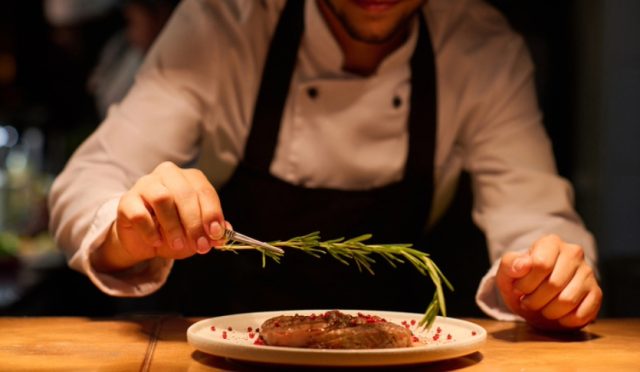
You leave the restroom and sit back at your table. Now it is time to observe the team serving you. The cleanliness of servers and assistants gives direct information about the discipline of the kitchen team. In a professional business, hygiene training is not only for chefs; it is for everyone from the valet at the door to the waitstaff.
First, look at the server’s clothing (uniform). Is the apron stained? Do the clothes look wrinkled and neglected? More importantly, are hands and nails clean? Is hair tied back, and is beard grooming handled properly? These are not just aesthetic details; the value a staff member gives to personal hygiene is directly proportional to the value they give to the plate they serve.
Also, staff movement during service tells you a lot. For example, pay attention to whether a server holds the glass by the rim or touches food with fingers while serving a plate. If these basic rules are violated, similar mistakes in the kitchen prep process are almost unavoidable. Staff hygiene is one of the clearest mirrors of a restaurant’s professionalism and health mindset.
Table Details: Menu, Condiments, and Table Linen
Most of the time, we focus only on our plate, but the supporting items on the table reveal major secrets about a restaurant’s “cleaning routine.” If the menu feels sticky in your hand, that is a moment to pause and think. Menus pass through dozens of hands each day and must be disinfected regularly.
So why is this so important?
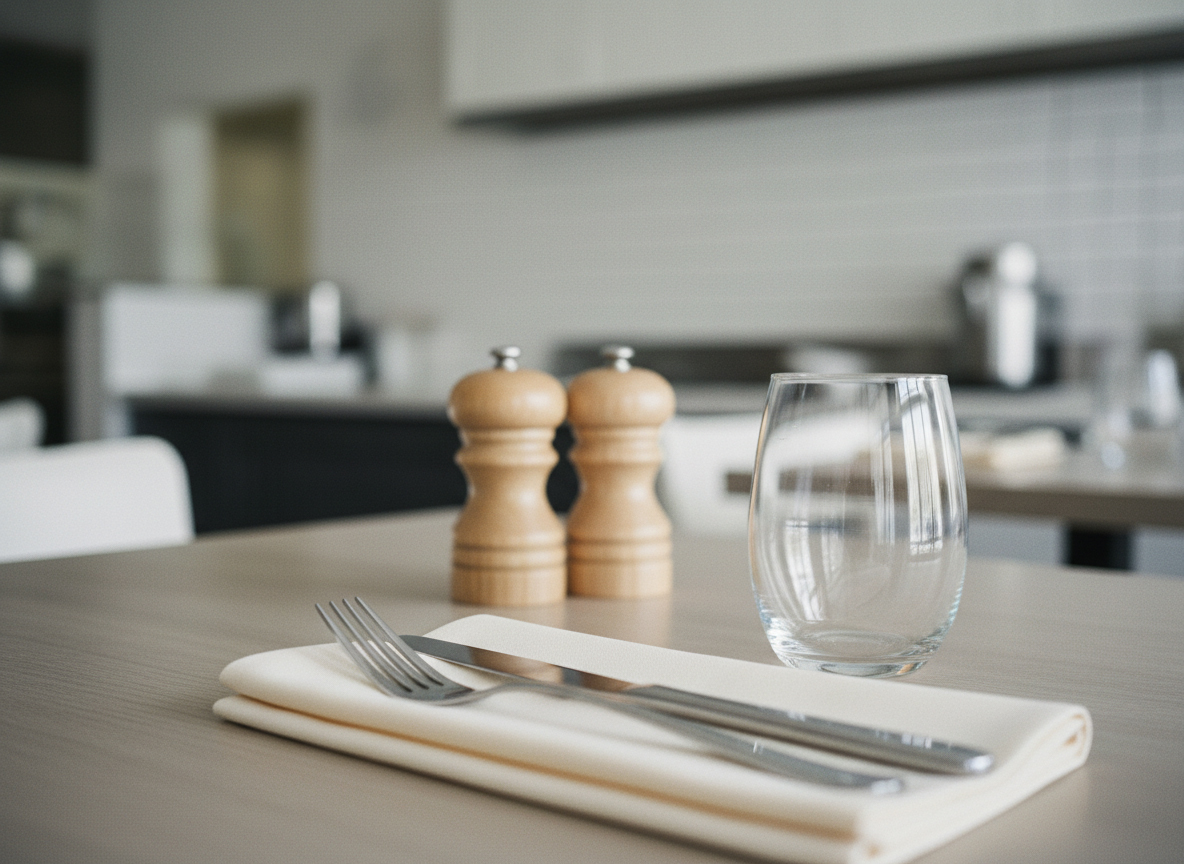
Because a business that does not clean its menu may also fail to clean kitchen counters and frequently used equipment often enough. The same applies to salt shakers, pepper mills, and oil bottles on the table. If the outside of an oil bottle is greasy or there is a dust layer on condiments, it usually means the place lacks a habit of “deep cleaning.”
Stains on tablecloths or placemats, or crumbs left from the previous customer, show that operational speed is prioritized over cleaning quality. In a truly professional kitchen, however, cleaning is too critical to be pushed behind speed.
Restaurant Smell and Air Quality
What is the first smell you notice when you enter a restaurant? Freshly baked bread, or heavy, stale frying oil? Smell reveals everything from ventilation quality to oil maintenance standards.
If there is a heavy oil smell in the dining room (like a burnt smell), this indicates fryer oils are not changed on time and ventilation filters are saturated. Dirty filters do not only spread bad odor; they also create a suitable environment for bacterial growth in the kitchen.
A clean restaurant should smell fresh. Odors masked with perfume or room spray are often signs that something is being hidden. Aromas coming from the kitchen should stimulate appetite. If the smell bothers you, your stomach will likely not be happy with food coming out of that kitchen either.
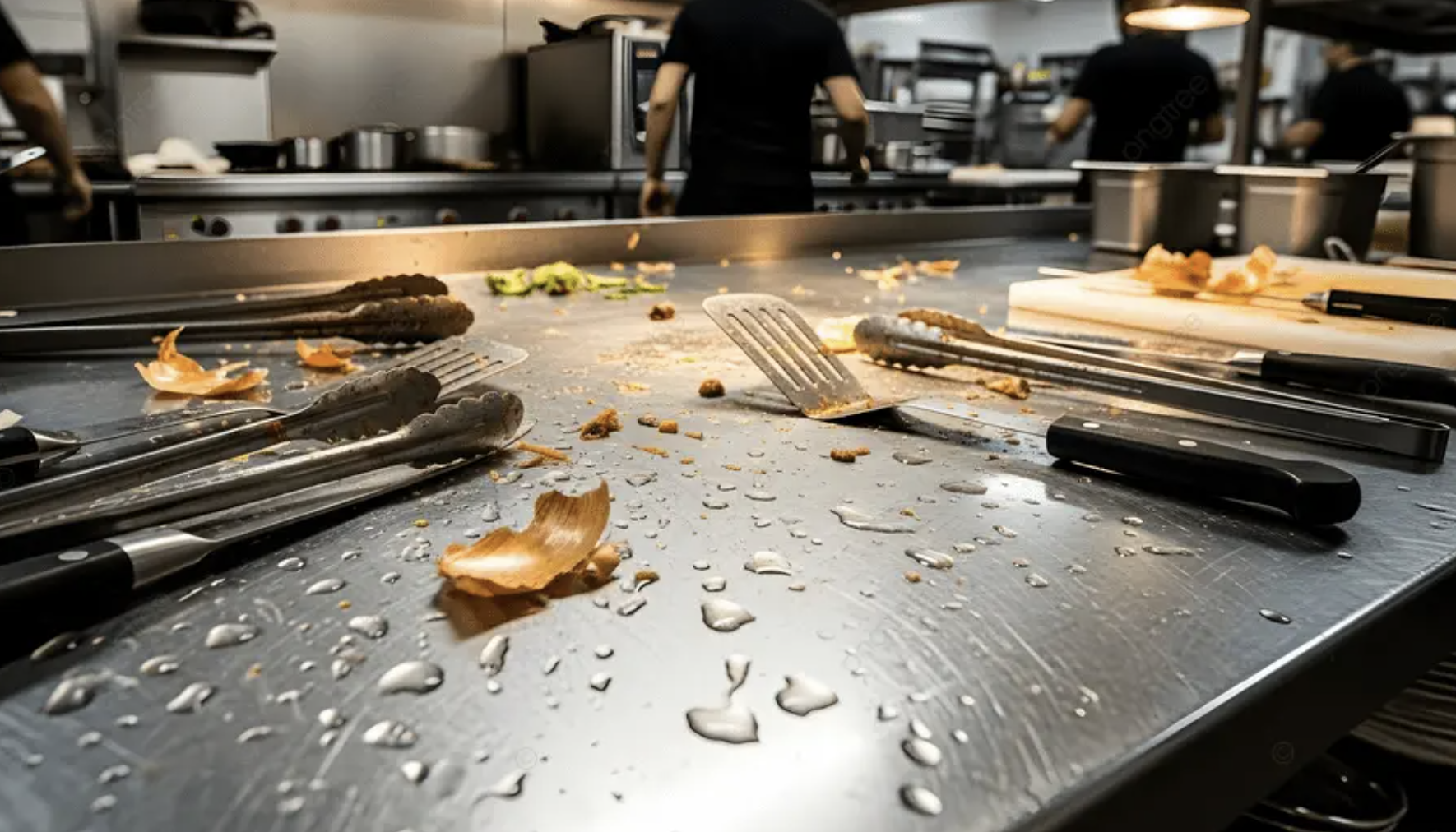
Floors and Hard-to-Reach Corners
The places customers usually overlook, but where cleanliness is hardest, are floors and table legs. The center of the floor may look shiny, but check wall edges, baseboards, and the points where table legs meet the ground. Dust and dirt buildup in these spots shows that the restaurant’s cleaning approach is “just make visible areas look okay.”
Sticky flooring is one of the biggest warning signs. It often indicates wrong cleaning products or that floors are only wiped over with a dirty mop. In a place where floors are dirty, the number of microbes that can spread from kitchen floors to prep areas is significantly higher.
Also, dust on window corners, ventilation outlets, and lighting fixtures gives insight into “detail-level hygiene.” A business that pays attention to these details usually shows the same care in the kitchen. Because cleanliness is a habit; those who are meticulous in one area are usually meticulous everywhere.
So, What Should You Do If You Notice Problems?
Seeing minor issues in one or two of these points may sometimes be due to peak-hour intensity. But if three or more warning signs appear at the same time, there may be no need to risk your health.
- Be Observant: Politely ask the server to clean the table or menu. Evaluate their response. If they apologize and fix it immediately, this may be an operational slip. If they act indifferent, this is a management problem.
- Read Online Reviews: Do not only check taste comments; search reviews using keywords like “hygiene” and “cleanliness.”
- Prefer Open Kitchens: If you are highly cautious, choosing places with partially or fully visible kitchens can give peace of mind.
There is one more topic you should read here… How to Spot Fake Restaurant Reviews ?
So the main takeaway from all of this is simple: Cleanliness is everything!
Once you learn how to read the signals a restaurant gives, eating out becomes much safer even without seeing the kitchen. Remember: good food is not only delicious food, it is also reliable food. A business with high hygiene standards is a business that values its customers.
Next time you visit a new place, do not only check menu prices. Also take one second to look at restroom soap dispensers, the server’s nails, and the cleanliness of table condiments. These small observations can make the difference between a great dinner and a potential stomach problem the next day.
Do you have a hidden criterion that makes you say, “This place is definitely clean”? Or have you ever left a venue because of cleanliness concerns? Do not forget to share your experiences and additional signals you watch for in the comments. See you at the next food stop.